Double anniversary for Norway's most comprehensive source of knowledge and facts
This past Wednesday was a double anniversary for ‘Store norske leksikon’. It marked 115 years since Norway’s first encyclopaedia was launched, and 10 years since “The Great Norwegian Rescue”, when the Fritt Ord Foundation and several other institutions joined forces to ensure the future of one of the country’s most comprehensive sources of knowledge and facts.
The Norwegian encyclopaedia reports having more than 3.2 million unique users every month, and that roughly 600 000 articles are accessed each day. This reference work offers more than 180 000 articles, written by more than 4600 contributors. The 1000 specialists responsible for the encyclopaedia are academic staff members employed by universities and colleges.
The encyclopaedia is organised as an association that counts all the Norwegian universities and a number of other knowledge- and culture-based institutions as members. The majority of the specialists who write for the encyclopaedia are researchers at the universities, with direct access to edit and publish articles.
Store norske leksikon is the largest knowledge-base in Norway that features quality-assured content, attributed to professionals under their full names. This makes it possible to be critical of sources, an important aspect of open, informed social debate.
Congratulations from Fritt Ord!


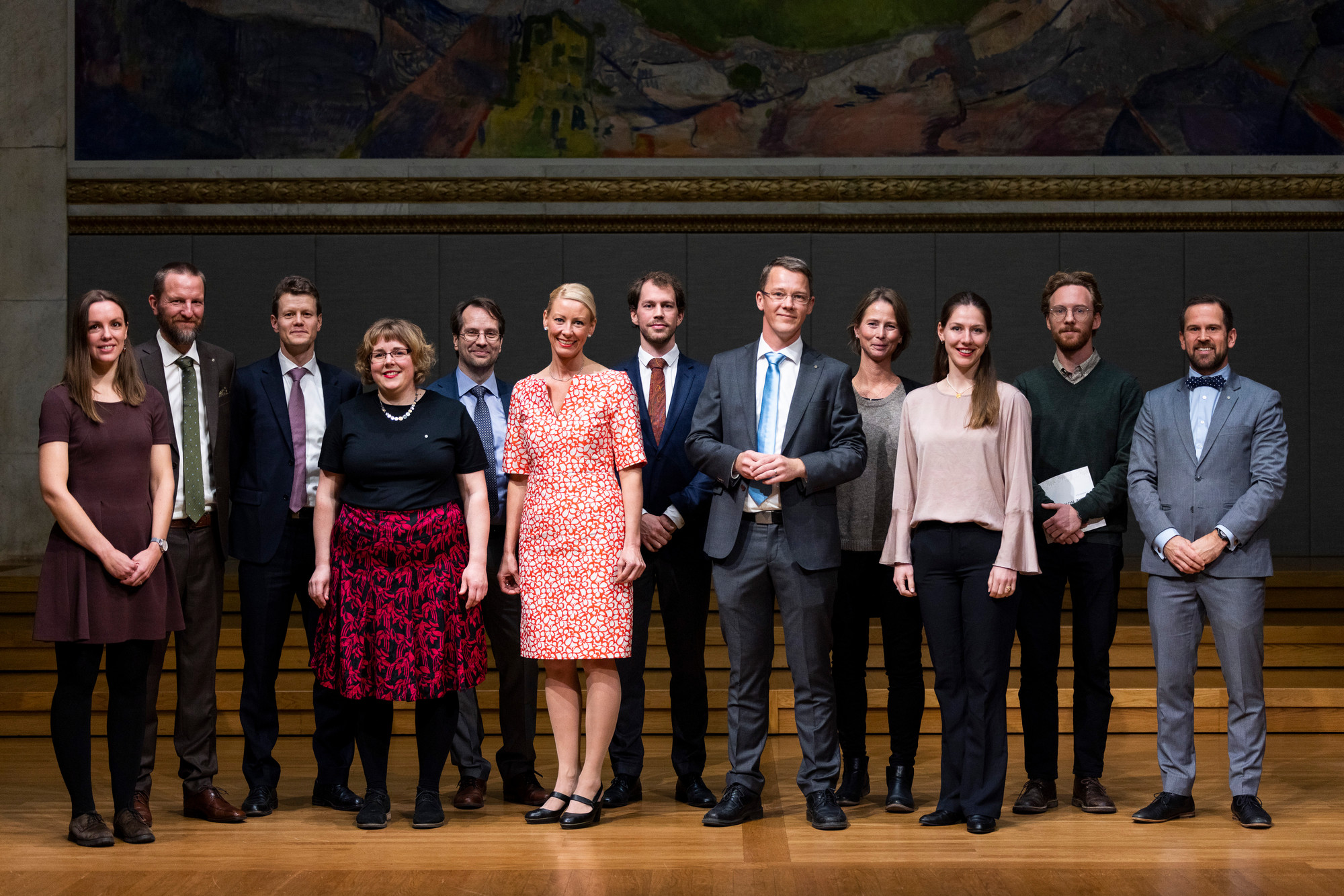
The anniversary commemoration took place in the University Aula, and featured speeches by Svein Stølen, rector of the University of Oslo, Knut Olav Åmås, executive director of the Fritt Ord Foundation and chair of the Store norske leksikon Board, Odin Adelsten Aunan Bohmann, state secretary at the Ministry of Culture, Margareth Hagen, rector of the University of Bergen and member of the Board of Store norske leksikon, Åse Wetås, executive director of the Language Council of Norway, Erik Bolstad, editor-in-chief of Store norske leksikon and Ylva Østby, neuropsychologist. In addition, there was a panel discussion on“The Great Norwegian Rescue” with Trond Andreassen (former chair of the Board), Anne Marit Godal (editor-in-chief 2011–2016), Petter Henriksen (chief editor 1995-2010) and Nils Christian Stenseth (former member of the Board), as well as musical interludes performed by the Vox Humana Choir.
Watch a recording of the commemoration here: