Film screening: Privacy of Wounds
The Human International Documentary Film Festival, UpNorth Film, the Fritt Ord Foundation and SPACE (the Syrian Peace Action Centre) invite the public to two screenings of “Privacy of Wounds”, a film about what survivors of Syrian prisons tell themselves in order to process previous experiences.
First screening
Tuesday, 26 February, at 6 p.m. at Cinemateket. After the film, the audience is invited to a conversation with Director Dalia Kury and two former political prisoners from Syria. Tickets are available for purchase here.
The two former political prisoners Mazen Esmaiel and Khaldoon Hawaley will talk about life in and after prison, and about what it means to be a political prisoner in Syria. Director Dalia Kury will also participate. The conversation will be moderated by Zeina Bali from SPACE – the Syrian Peace Action Centre. The event will be interpreted from Arabic to Norwegian.
Second screening
Saturday, 2 March, 2 p.m., at the Vega Scene. The audience is also invited to a Q&A with Director Dalia Kury after the film. Tickets are available for purchase here.
About the film
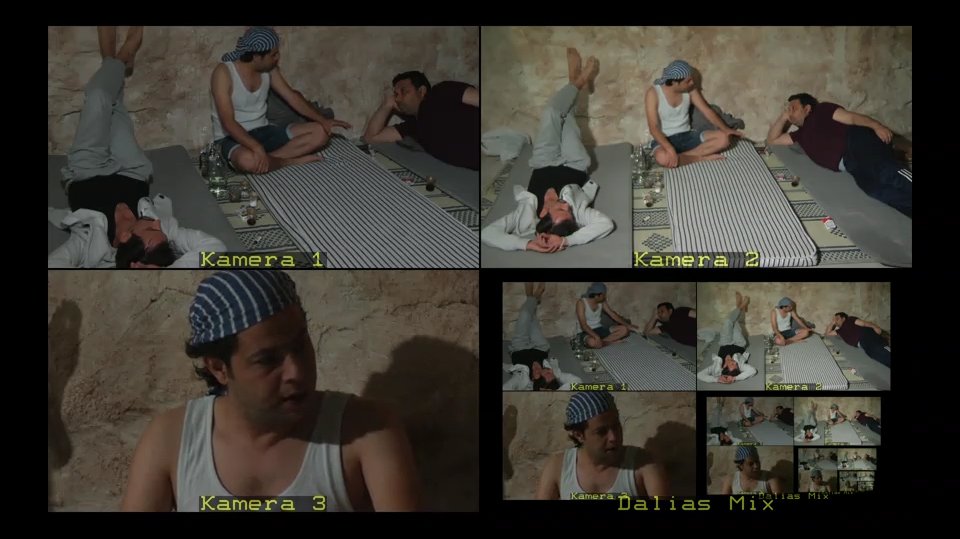
Hasan, Mazen and Khaldoon are former political prisoners from several of Syria’s most infamous prisons. Convinced that the men would communicate with a greater openness and honesty with each other without the director in the room, the director constructed a prison cell and fitted it with three remotely controlled cameras.
Even after the dreadful experiences they went through in captivity, these three men have never given up the hope of having better lives. The film gives us a glimpse of how they perceive their own status, as well as what their psychological challenges are, seen in the light of their current situation. The men’s dialogue and thoughts reflect the topic of Syria and take us on an inner journey about what are the truly important things in life.
About the festival
The Human International Documentary Film Festival will take place from 25 February to 3 March; it is Oslo’s largest festival for new Norwegian and international documentary films. The festival lasts for seven days, and includes both a Norwegian and an international competition. In addition to a widely diverse film programme, the public is invited to debates, seminars, presentations, conversations and a programme with special emphasis on relevant social issues and topics relating to human rights.
In 2019, the festival venues will include Vega Scene, Cinemateket, Kunstplass and the Khartoum Contemporary Art Centre.