Loveleen Rihel Brenna and Walid al-Kubaisi to receive Freedom of Expression Foundation Tribute
Oslo, 20 May 2016
PRESS RELEASE
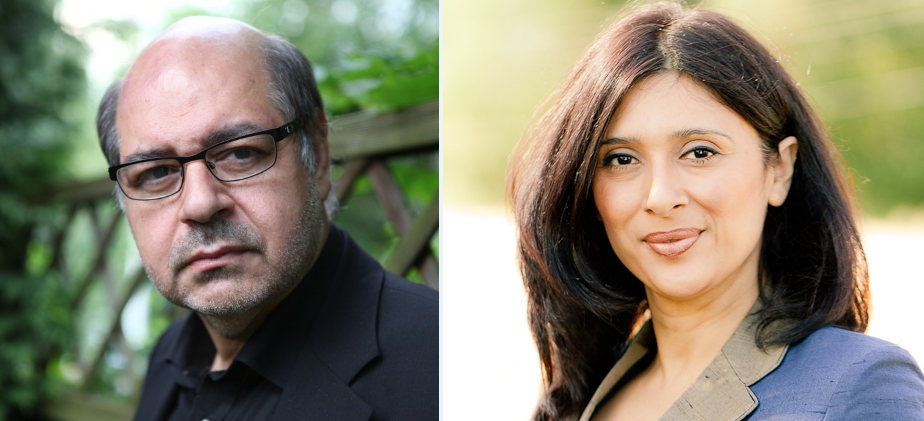
The Freedom of Expression Foundation Tribute is awarded to Loveleen Rihel Brenna and Walid al-Kubaisi for their insightful contributions to Norway’s public debates over the past two decades, and not least for their contributions to discussions about immigration and integration. They have participated on secular (non-religious) terms, and brought nuances and vitality to the diversity debate.
Loveleen Rihel Brenna created quite a sensation this spring when she drew attention to the new, stronger tendency towards defining Norwegians from ethnic minority backgrounds as “immigrants” in perpetuity. Brenna is managing director of Seema AS, a company that works with management training and organisational development to strengthen diversity in Norwegian working life. She has held a number of offices in civil society, including chair of the National Parents’ Committee for Primary and Secondary Education, board member of UNICEF Norway and member of the National Committee for the Norwegian Red Cross, and she headed the efforts to make a public report on educational programmes for pre-schoolers. She has published several debate books, and she has a master’s degree in education management. Brenna was born in India in 1967.
Walid al-Kubaisi is an author and has a fellowship from the state; over the years, he has carved out a reputation for himself as a powerful and original writer. His invaluable contributions to the social debate often bear elements of cultural criticism and or assume a perspective based on criticism of religion, reflecting his considerable insight and knowledge. Al-Kubaisi is graduate engineer by education. He fled from Iraq in 1981, during the war with Iran, and worked as a journalist in Syria and Lebanon for several years. He came to Norway in 1987. He has written a number of books, including children’s books, as well as a screenplay. He is regular contributor to the weekly newspaper Dag og Tid. Al-Kubaisi was born in Iraq in 1958.
The recipients will receive NOK 100 000 each. The Freedom of Expression Foundation Tribute acknowledges remarkable efforts to promote free speech, often in connection with current events. The Fritt Ord Foundation awards the Freedom of Expression Foundation Tribute.
The awards ceremony for Loveleen Rihel Brenna and Walid al-Kubaisi will be held on 16 June, from 10 – 11.30 a.m. at the Fritt Ord Foundation’s premises.
Contact:
Loveleen Rihel Brenna, mobil 908 40 725
Walid al-Kubaisi, mobil 454 37 184
Georg Fr. Rieber-Mohn, Fritt Ords styreleder, mobil 951 53 255
Knut Olav Åmås, Fritt Ords direktør, mobil 908 68 139