What's happening in Georgia? Art, documentary film and the fight for democracy
Monday 29 September 2025 at 6.30–8 pm at Vega Scene, Oslo
“While art is often relegated to the bottom of financial priorities, it paradoxically becomes the first target of dictators.”
Fritt Ord invites you to a presentation of a hyper-relevant, upcoming documentary film “Untitled” from Georgia and a conversation with two film directors about the political developments in the country in collaboration with Oslo Dokumentarkino, Stray Dogs Norway, Viken Filmsenter and the Norwegian Film Federation. Journalist Ingerid Salvesen is the moderator. For the safety of the filmmakers, we will not mention their names in advance.
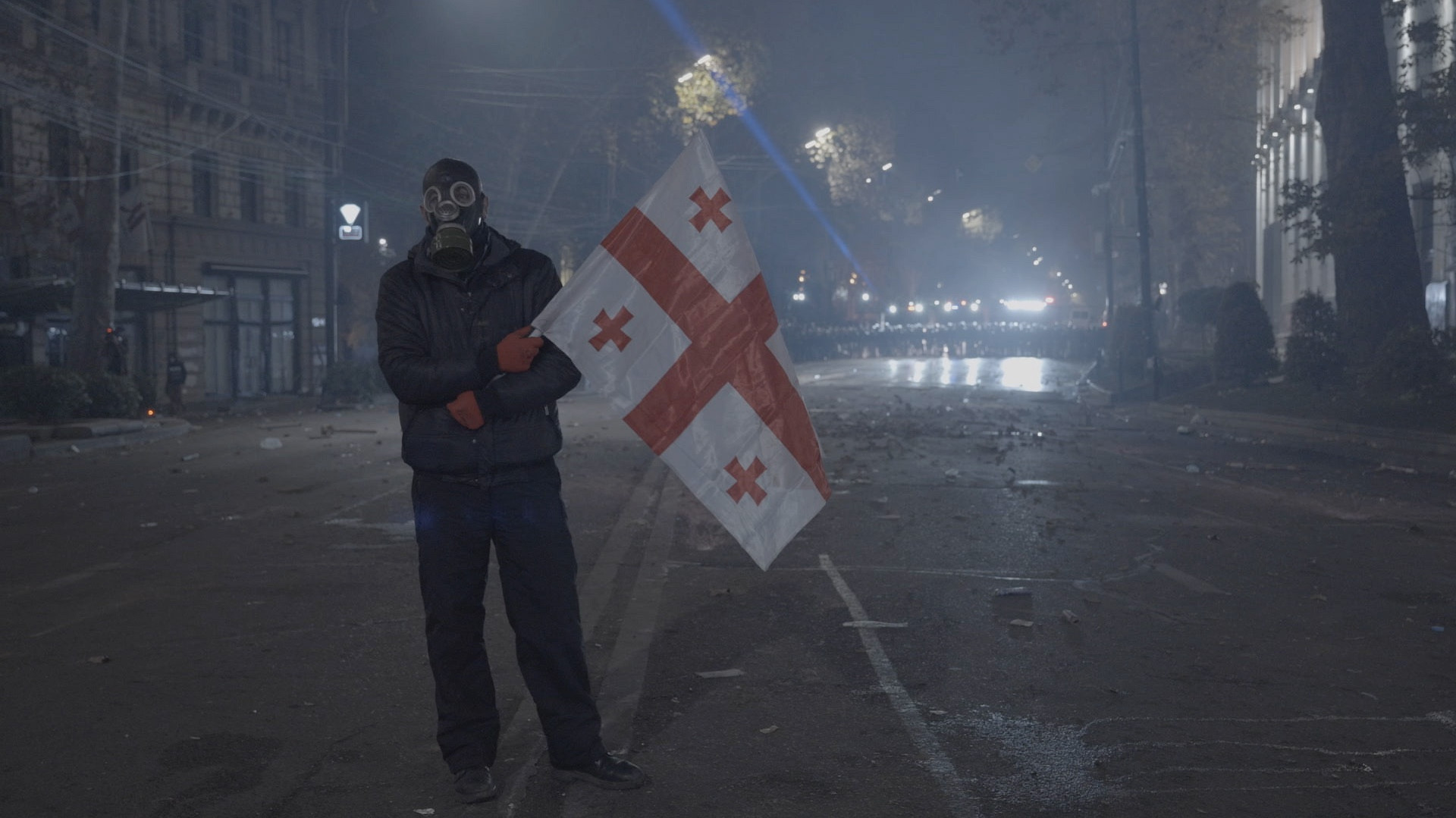
Since Russia’s full-scale invasion of Ukraine in 2022, Georgian authorities – increasingly aligned with the Kremlin’s rule – have turned their attention inward by attacking their own cultural sector. Documentary filmmakers were among the first to be targeted, accused by government officials and pro-state media of “showing Georgia in a bad light”.

What is happening to Georgian filmmakers is not an isolated crisis – it is part of a growing global assault on democracy and freedom of expression. Georgia is part of a larger pattern, for example, the “foreign agent” law has sought to destroy independent media in Russia, filmmakers have been arrested and forced into exile in Belarus, and attempts are being made to control cultural institutions with state ideology in Hungary.
The autocratic “playbook” is increasingly being used to control the narrative, silence dissent, and isolate people who speak the truth.
Georgian filmmakers rallied against political developments as early as 2023, and together with artists, journalists, students, and other citizens, they have continued to protest, organize, and create even under surveillance, smear campaigns, and threats.
At Vega Scene, we engage in dialogue with Georgian filmmakers about their struggle for freedom of expression and artistic independence today, and further ask how we should address such developments in close partners.
“Untitled” was pitched as part of the “Spotlighted Projects” program at the Cannes Film Festival this year. The film is about the Georgians’ struggle for democracy, and it is based on four personal diaries that provide different perspectives on the protests – political, social and human – under a common theme: resistance.