Norway's first journal about narratives. Reports, investigative journalism and new grants for journalism
“Those of us who do not live in cities also deserve access to rich public discourse,” says Tora Hope, editor of Jaja, a new journal about narratives based in the village of Fjaler in western Norway. The student newspaper Universitas has received funding to examine the situation for freedom of expression at educational institutions, and photojournalist Nora Savosnick has been on a reporting trip to Israel and Palestine. See the new grants for journalism (list in Norwegian only).
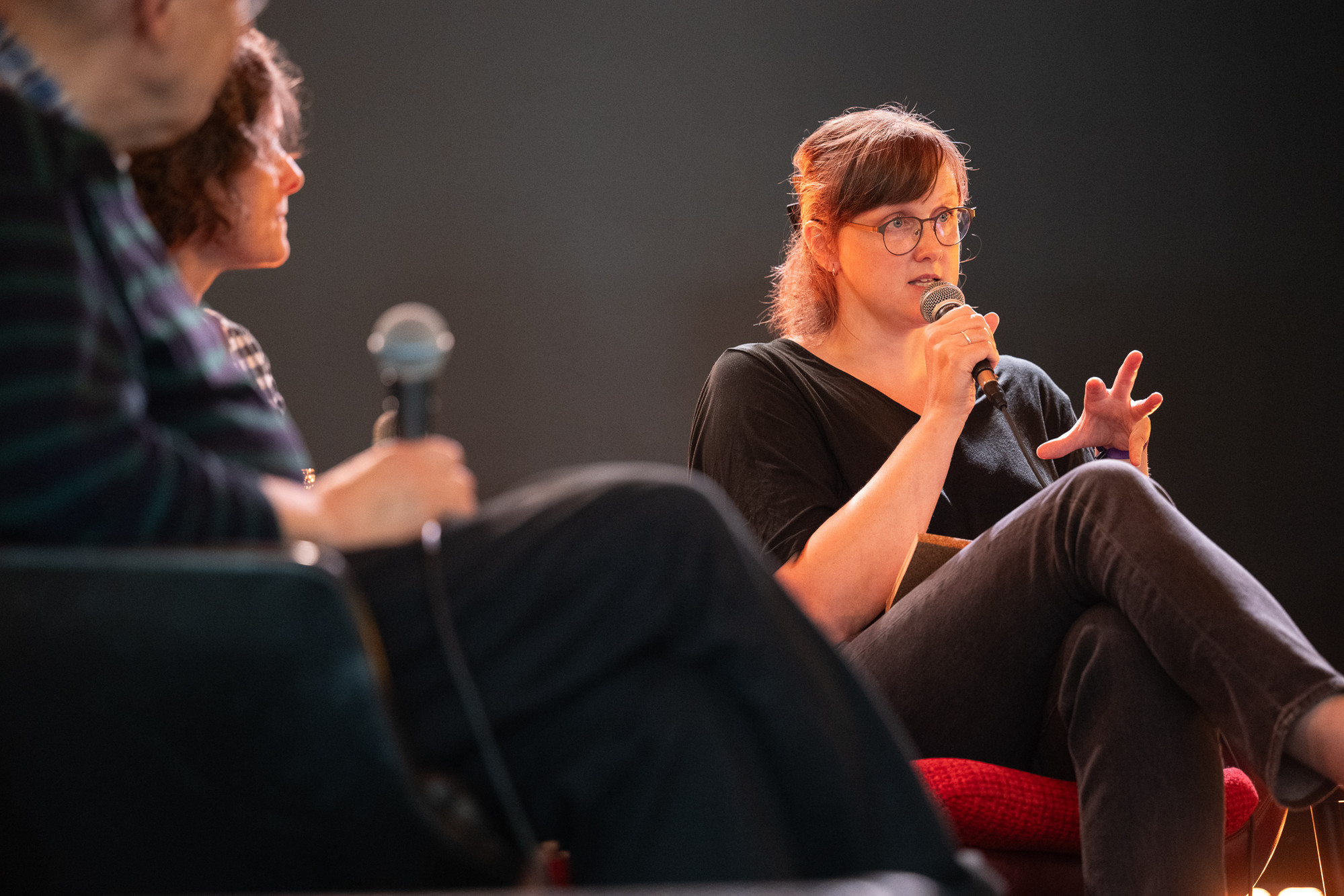
“I actually got the idea for Jaja when I moved back to my home village after many years in Oslo,” comments Tora Hope, editor of the newly established journal Jaja – for written and oral storytelling. Hope says she was frustrated by the fact that the same stories are told again and again from rural Norway, and that they usually involve ‘emigration and bleak prospects’ for the future.
“Perhaps we could also discuss about other issues when we talk about rural areas? Those of us who live outside the cities also deserve rich public discourse," she adds.
The publisher, the Jakob Sande Centre for Narrative Arts, and the journal’s editorial board developed the idea for the journal, which was “launched during the theatre festival in Fjaler”:https://www.journalisten.no/lager-nytt-tidsskrift-for-fortellerkunst/588555 in September 2023. The editorial board is based in Fjaler, making the periodical a national journal with roots in the countryside, as they themselves emphasise.
In the first issue, Hope introduces readers to author Brynjulf Jung Tjønn’s short story ‘The Chinaman’, journalist Siri Helle’s article ‘Everything that lives in an old house’, social anthropologist Dubie Toa-Kwapong’s ‘To tell a story is to carry on’, and author and teacher at the Academy for Creative Writing Tormod Haugland’s text entitled ‘A divine talent for storytelling’. In future, Jaja will also try to publish reviews of art and culture in rural areas. The journal will be published with four digital and one physical edition in 2024. The start-up is co-funded with Sparebank foundations in Sogn og Fjordane and Fjaler.

Students investigate
The student newspaper Universitas has received funding for a new round of investigative projects under the guidance of editor Alida de Lange D’Angostino and chief investigative reporter Thea Eide. The funds will be used to “take a closer look at the educational institutions in Oslo” by seeking access to the public records of the University of Oslo and other educational institutions, and following up on tips that require investigation. Universitas is Norway’s largest student newspaper, publishing 30 issues per year.
On several occasions, Fritt Ord has supported investigative journalism in the student newspaper. The issues covered by the newspaper lately include a piece about a master’s degree student who was without a supervisor for almost two years, and one about an IT employee at the University of Oslo who allegedly shared pro-Russian propaganda and conspiracy theories online.

Reports on Israel at war
Photojournalist Nora Savosnick received funding for reports from Israel and Palestine, one of which was published in Morgenbladet, in cooperation with Nikolai Melamed Kleivan. She traveled in mid-October, after the war began.
“The situation was constantly shifting, leading us to focus on a story about Palestinians who have Israeli citizenship in Israel. One day they were helping to save lives during the 7 October massacre, then the next day they faced growing hostility as members of the Arab minority. Savosnick is also planning a more comprehensive feature article on the Be’eri kibbutz, which she plans to follow over a longer period.