No Other Land
The Fritt Ord Foundation is collaborating with the Human International Documentary Film Festival and Antipode Films to screen ‘No Other Land’ at Vega Scene in Oslo on Monday, 4 March 2024 at 6 p.m. and 6:45 p.m., and at Cinemateket in Oslo on Tuesday, 5 March at 4 p.m. Directors Basel Adra and Yuval Abraham, who are also the film’s protagonists, will appear live on a video link from Masafar Yatta on the West Bank both days.
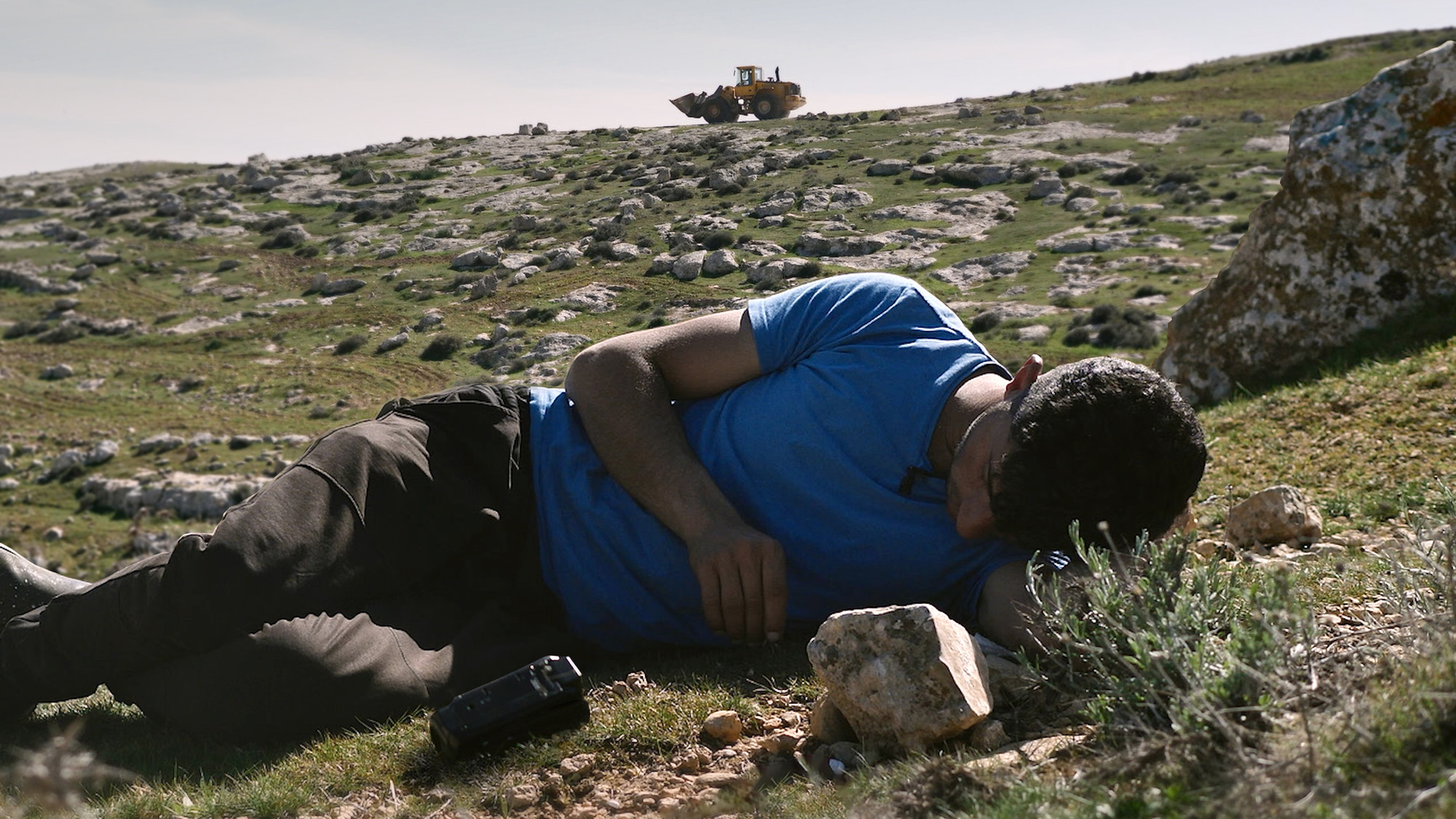
No Other Land
Basel Adra is a journalist, filmmaker and activist from Masafar Yatta on the West Bank, who has fought against mass evictions from his community for many years under the Israeli occupation. In ‘No Other land’, he documents the extermination, over time, of the villages in his home region, where soldiers deployed by the Israeli army gradually destroy houses and displace the local population. Basel Adra meets Israeli journalist Yuval Abraham, who supports him in his plight, and an unexpected alliance develops. Yet the connection between the two is characterised by a huge disparity: Basel lives under military occupation while Yuval lives freely and without restrictions.
‘No Other Land’ has been made by a Palestinian-Israeli film collective consisting of Basel Adra, Hamdan Ballal, Yuval Abraham and Rachel Szor. Basel Adra is a Palestinian lawyer, journalist, filmmaker and activist from Masafer Yatta on the West Bank. Hamdan Ballal is a Palestinian photographer and farmer from Susya on the West Bank, who has worked as a researcher for several human rights groups. Yuval Abraham is an Israeli filmmaker and investigative journalist who lives in Jerusalem. Rachel Szour is an Israeli cinematographer, editor and director who lives in Jerusalem.
Fabien Greenberg and Bård Kjøge Rønning are co-producers, along with Basel Adra and Yuval Abraham.
Post-screening conversation after the film on Tuesday, 5 March at Cinemateket
Basel Adra and Yuval Abraham will join us live via video link for an in-depth talk after the film. They will talk about the resistance struggle, today’s unbearable situation, and opportunities that may arise in the future. The conversation will be in English.
Monday’s video link will feature a brief introduction to the film.
‘No Other Land’ recently had its world premiere at the Berlinale, and the screenings at the HUMAN International Documentary Film Festival are the first in Norway.
Update as of 25 February 2024: ‘No Other Land’ won both the Audience Award and the Best Documentary Award at the Berlinale.
Billetter:
Mandag 4. mars kl. 18.00
Mandag 4. mars kl. 18.45
Tirsdag 5. mars kl. 17.00
Want news about Fritt Ord’s projects, prizes and events? Subscribe to Fritt Ord’s newsletter