Digital diplomacy
Thursday 31 October, 2013, 19:00–21:00 at Fritt Ord, Uranienborgveien 2, Oslo
Are international relations and debates being revolutionized by social media? Nations rush to build their ‘online presence’, interacting and engaging with global publics. Diplomatic time and money are poured into Facebook, Twitter and Instagram. But does it work? And in the era of Wikileaks and Edward Snowden, is technology undermining diplomacy rather than supporting it?
Four prominent panelists will help us distinguish hype from reality and what is genuinely new from old problems in new trappings.
PROGRAMME
Introductory remarks:
Giles Scott-Smith, Roosevelt Study Center/Leiden University, Netherlands
Tore Tennøe, the Norwegian Board of Technology
Panel discussion: moderated by Tore Tennøe
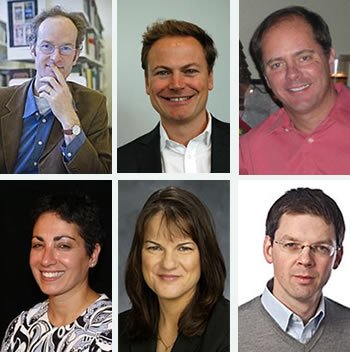
Thomas Zeiler, University of Colorado
Laura Belmonte, Oklahoma State University
Barbara Keys, University of Melbourne
Frode O. Andersen, Ministry of Foreign Affairs
Giles Scott-Smith is professor of diplomatic history, University of Leiden, Netherlands. Chairman of Transatlantic Studies Association since 2013. Author and editor of numerous books on the history of relations between the US and Europe.
Tore Tennøe is director of The Norwegian Board of Technology (Teknologirådet), and currently advising the Norwegian Parliament and Government on the digital transformation of law enforcement, education and health services. Graduate degrees in international history and history of technology from the London School of Economics and the University of Oslo.
Thomas Zeiler is professor of history and international affairs at the University of Colorado at Boulder. President (2012) of the Society for Historians of American Foreign Relations and executive editor of Diplomatic History. Author of six books, ranging from baseball to military history. Member of the U.S. Department of State’s Historical Advisory Committee.
Laura Belmonte is professor of history and director of American Studies at Oklahoma State University. Serves on the U.S. Department of State’s Historical Advisory Committee. Among her books are Selling the American Way: U.S. Propaganda, and the Cold War (University of Pennsylvania Press, 2008) and Speaking of America: Readings in U.S. History.
Barbara Keys is senior lecturer in History at the University of Melbourne. Keys has researched the history of intercultural relations, globalization, human rights, the effects of transnational movements and organizations on the behavior of states, and the role of emotions in history. Among her publications is Globalizing Sport: National Rivalry and International Community in the 1930s (Harvard University Press, 2006).
Frode Overland Andersen is the deputy head of communications in the Norwegian Ministry of Foreign Affairs. He joined the Norwegian Foreign Service in 1999 and has worked extensively on media and communications, security politics, as well as serving in the Balkans and at NATO. Graduate degree in comparative politics from Freie Universität in Berlin and the University of Bergen.
This event is funded by The Norwegian Board of Technology, Department of Archaeology, Conservation and History at the University of Oslo, Embassy of the United States in Oslo, Walker Institute of International and Area Studies (University of South Carolina), Roosevelt Study Center (Netherlands).