Speech for the Free Media Award laureates, on behalf of the jury
Speech by Jury member, Martin Paulsen, at the award dinner at Restaurant Funicular in Tbilisi, Georgia, Friday, 25 November 2016.

Dear Free Media Award laureates, ladies and gentlemen!
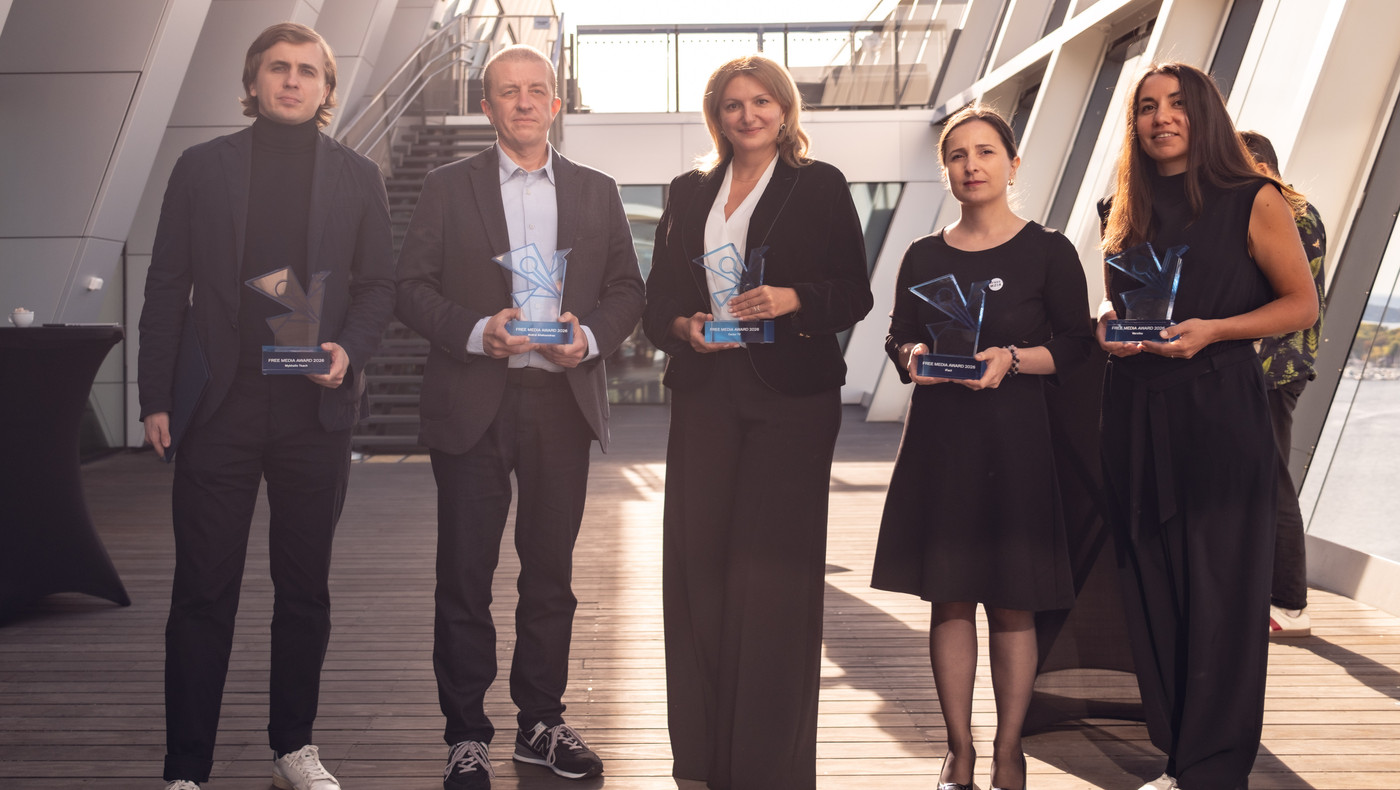
We are gathered here tonight to celebrate the 2016 laureates of the Free Media Award: the journalists Seymur Hazi, from Azerbaijan, and Elena Milashina, from Russia, as well as the team behind the news site Nashi Groshi in Ukraine, represented here by Aleksey Shalayski, Jurii Nikolov and Irina Sharpinskaya.
The Jury this year consisted of Ane Tusvik Bonde, Alice Bota, Guri Norstrøm, Stephanie Schiffer, Stephan Wackwitz and myself. We had a difficult task selecting the laurates for the 2016 Free Media Award – the region is rich in talented and dedicated journalists. We looked into the work of some 40 journalists and news outlets. The work of this years laurates – you, Elena, Aleksey, Yurii and Irina, and of course Seymur – stood out against this pool of journalistic ability.
When it comes to your work, and the reasons why we chose you for this honour, I would like to emphasise the importance of three concepts: COURAGE, SOLIDARITY and COMPETENCE.
Courage lies at the heart of all journalistic work in a region where life is at stake when you become committed to critical and investigative reporting. According to Committee to Protect Journalists, 84 journalists have been killed since 1992 in the Eastern European countries covered by the Free Media Award. Imprisionment, torture and threats happen on a regular basis. Seymur has paid a high prize, receiving a five year prison sentence that is impossible to understand without taking his activity as a journalist into consideration. But he stands strong – continuing to express his critical opinion on the situation in the country from behind bars. Elena shows an incredible courage on a daily basis, exposing power abuse in Russia’s most violent region, knowing that many of her colleagues has paid the ultimate prize for similar work.
Personally, I am struck by the solidarity among journalists in the region – how you support each other both in your daily work, and when the going gets tough. Solidarity is a crucial part of Nashi Groshy’s project. You dig out information about corruption in the enormous pile of public tenders and make them available for your fellow journalists in their writing.
To my mind, however, this aspect of solidarity is even more apparent in Azerbaijan, one of the most difficult countries to operate in as a journalist. While still free, Seymur wrote extensively on the hardships of his journalist colleagues – in fact, the last piece he published before being arrested himself was about the beating of Ilgar Nasibov, a fellow investigative journalist from the enclave Nakhchevan. “Ilgar Nasibov,” Seymur wrote " wearing a bloody shirt may be all of us. No one is immune to wear it." Now Ilgar has managed to get out into safety in Norway, with his wife and colleague Malahat Nasibova, while Seymur is wearing the prisoners shirt.
Competence is a defining character of all our laureates. This is true for Seymur Hazi who has worked as a reporter for the opposition newspaper “Azadliq” and a leading anchor for the “Azerbaijan Saati” TV program. He is known for his comments and analysis which are often critical of Azerbaijani authorities. He is a true intellectual in the way he analyses the development of contemporary Azerbaijan.
It is also true for Elena Milashina who is a correspondent in the Northern Caucasus for the Novaya Gazeta newspaper, based in Moscow. Through her research and reports she has drawn wide and also international attention to the Russian government’s crackdown on civil society, wide spread corruption, as well as the ongoing gross human rights abuses in the Northern Caucasus. In cooperation with international and national human rights NGOs, she documents cases of enforced disappearance, arbitrary detention, extrajudicial executions, torture, and persecution of relatives of alleged insurgents in Chechnya and other republic in the Northern Caucasus. Elena Milashina’s brave writing has a way of getting through to a reader. She is a journalist who knows her case, whose facts are straight and she is never afraid to criticize, even the Russian president Vladimir Putin or the Chechen president Ramzan Kadyrov.
Competence is also a key ingredient in the success of Nashi Groshi (Our Money), which is a Kiev-based website dedicated to fighting corruption in Ukraine. Nashi Groshi presents extensive information about public calls for tender and business transactions, investigating civil servants’ and politicians’ involvement in public contracts, and publishing the relevant facts. They do the really important journalistic work of revealing corruption where others – who lack their competence – would not be able to see it. Nashi Groshy sees it as their job to present facts about corruption in such a way that it becomes accessible to fellow journalists, for them to use it in their stories. Thus, they have found and inhabited a niche that serves the promotion of knowledge about corruption in Ukraine.
I would like to conclude by expressing our – and I believe I can speak for the entire jury here – admiration for the courage you show in your everyday work as journalists in a volatile region. I would like to point out the importance of the solidarity you show with your journalist colleagues, this is essentially important in a situation where personal safety and security is at stake. I want to commend the high journalistic competence that lies at the core of your work – it should serve as an inspiration also for people outside your own countries.
And finally, I would like to adress the Azerbaijani president Ilham Aliyev: release Seymur Hazi – he is much to important for your country and people to keep behind bars!
I would like to suggest a toast to this years laureates – for your courage, solidarity and competence – but most of all for the quick release of Seymur Hazi!